 ON DISPLAY
Uniforms & Wings
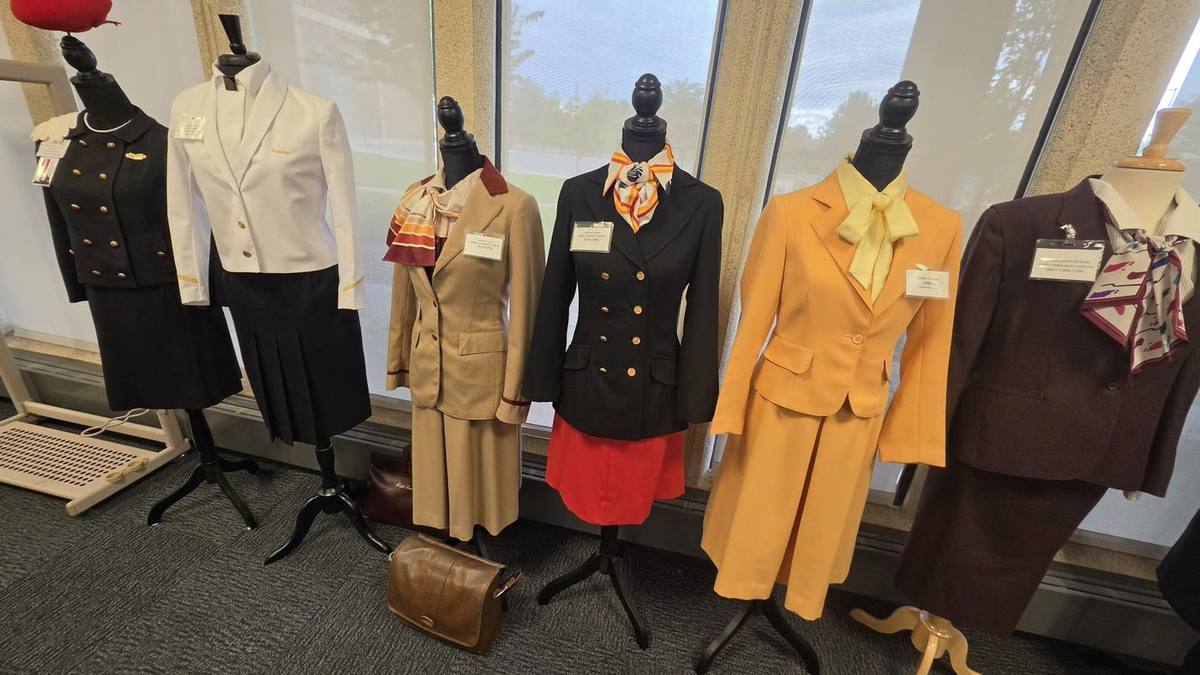
A stewardess uniform worn on the first SFO–Honolulu DC-6 flights in 1947, a 1970s uniform by Hollywood designer Jean-Louis, and uniforms from every era.
ON DISPLAYA stewardess uniform worn on the first SFO–Honolulu DC-6 flights in 1947, a 1970s uniform by Hollywood designer Jean-Louis, and uniforms from every era.
Rescued from weather damage in the 1990s and restored twice by volunteer A&P mechanics before landing at DENTK in 2008.
A broken propeller from a De Havilland 4 mail plane, recovered from "Hell's Stretch" over the Alleghenies.
A UAHF-funded restoration of a 1927 Swallow with the EAA, viewable at Pioneer Airport in Oshkosh.
 MEMORIAL
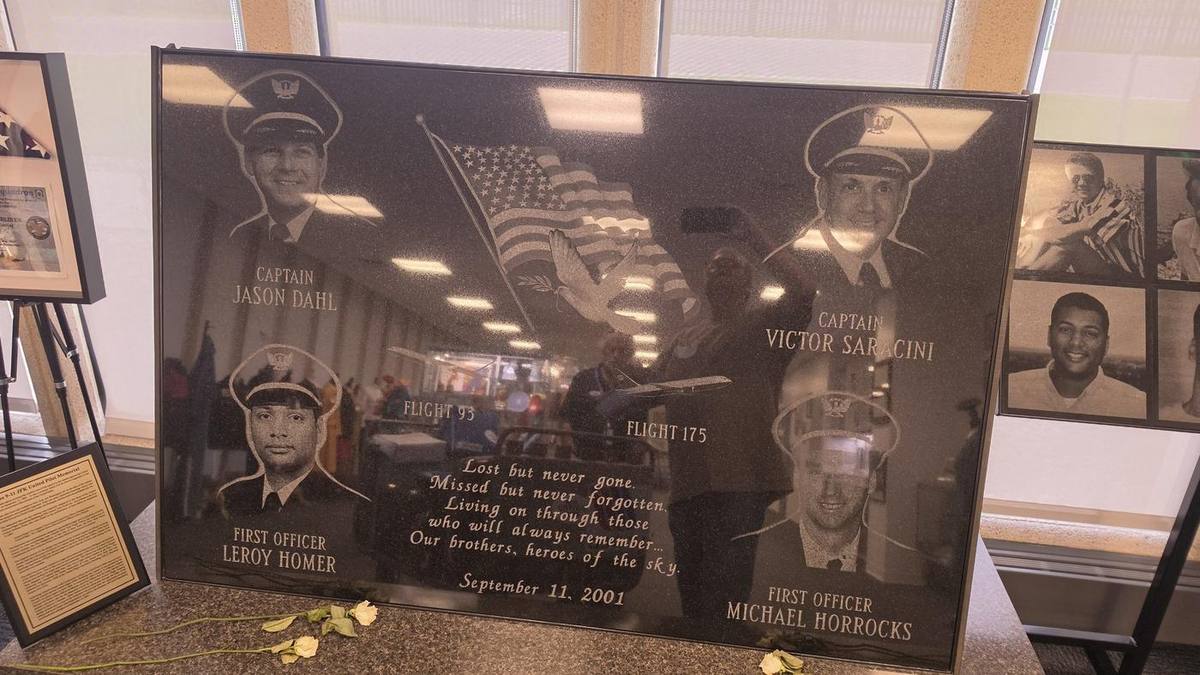
Honors the two United flight crews lost on September 11, 2001 — originally in the Memorial Garden, now inside the exhibit.
 ON DISPLAY
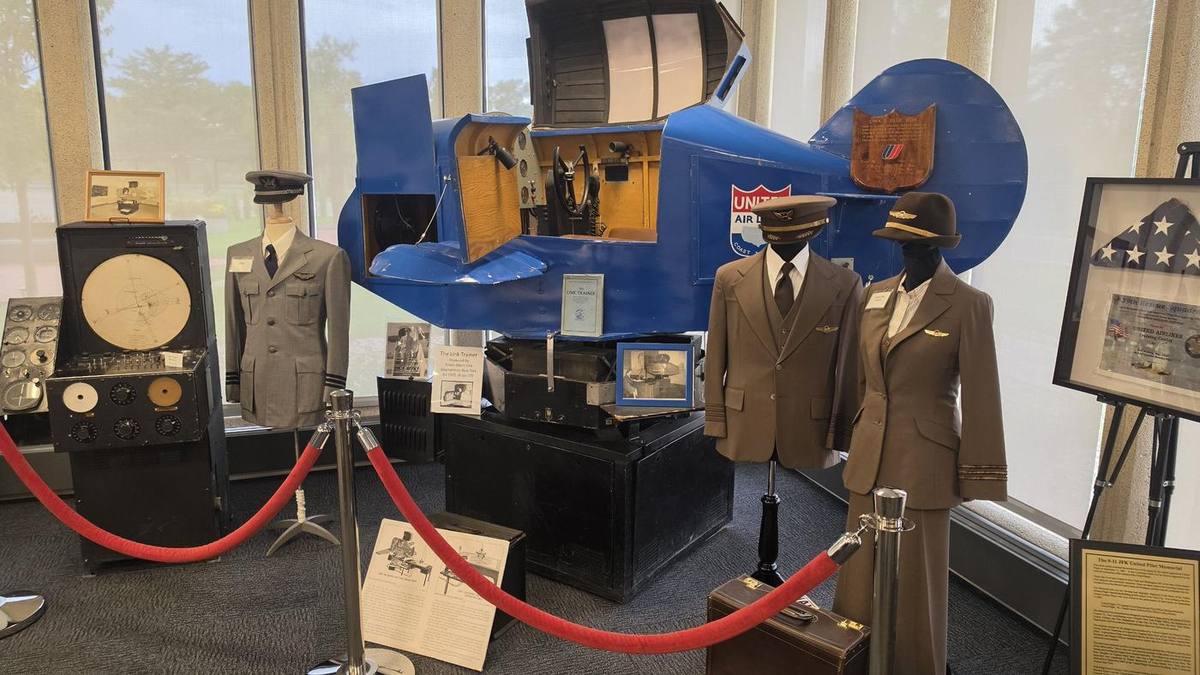
An early flight simulator in the exhibit alongside uniforms, models, glassware, china and a Micronesia section.
Every caption below comes from a placard, plaque or framed document in the Historical Exhibit.
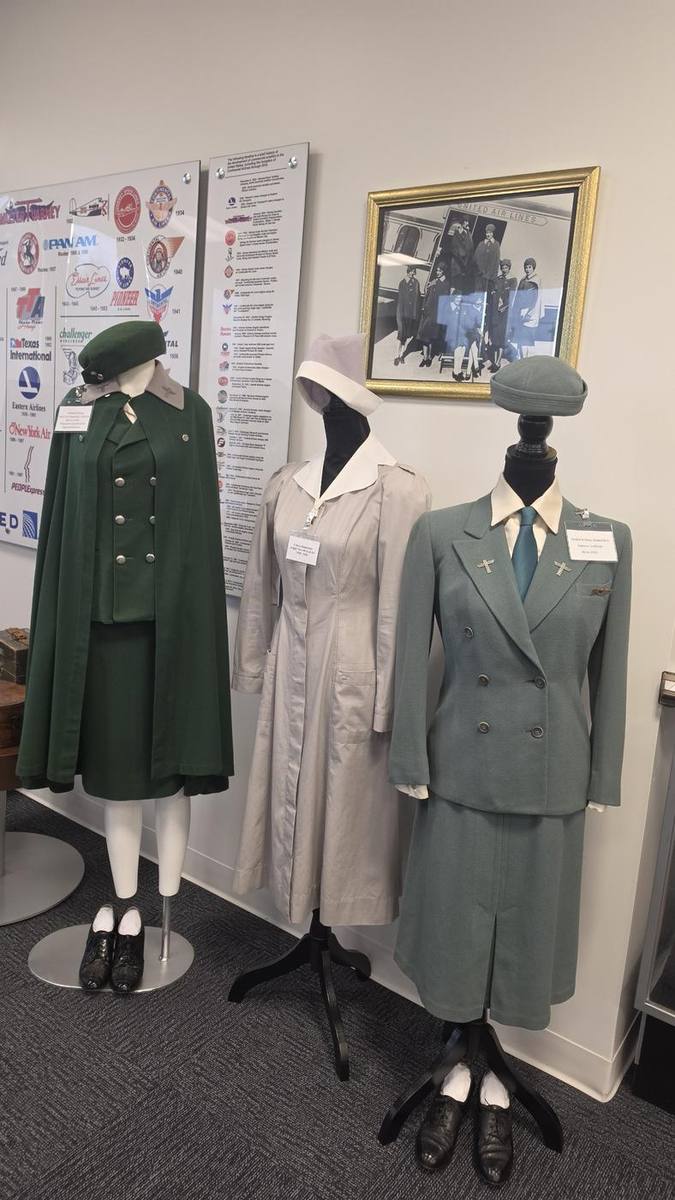
The exhibit’s very first stewardess uniform was worn in 1930. Those pioneers were required to be Registered Nurses. Placards in the display date an in-flight nurse dress and hat to 1930–1932, and a gray stewardess suit with blue scarf to 1930–1937.
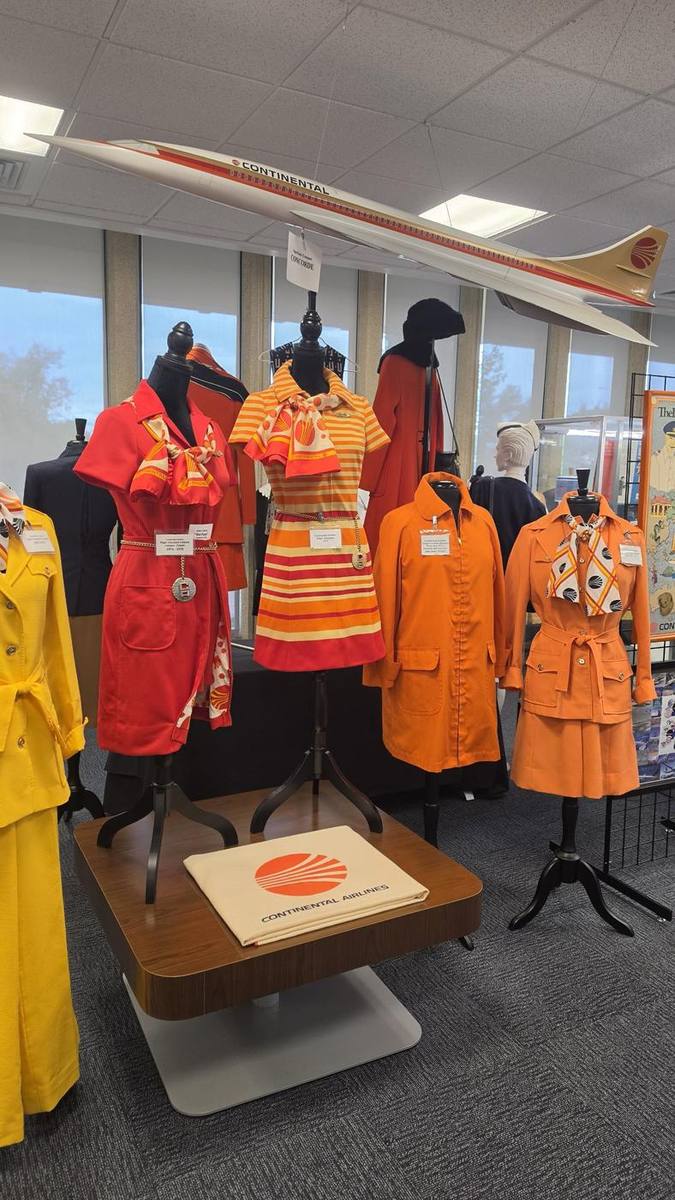
Mannequins trace the look of the cabin crew across the years. The Continental-side collection includes flight attendant uniforms dated 1974–1978 (including a summer “hot pants” dress), 1979–1985, the 1980s, and 1986–1990, alongside bold orange, red and yellow styles from the early 1970s.
Wings cases show how crew insignia changed from the NAT male courier wings to modern United and Continental pins.
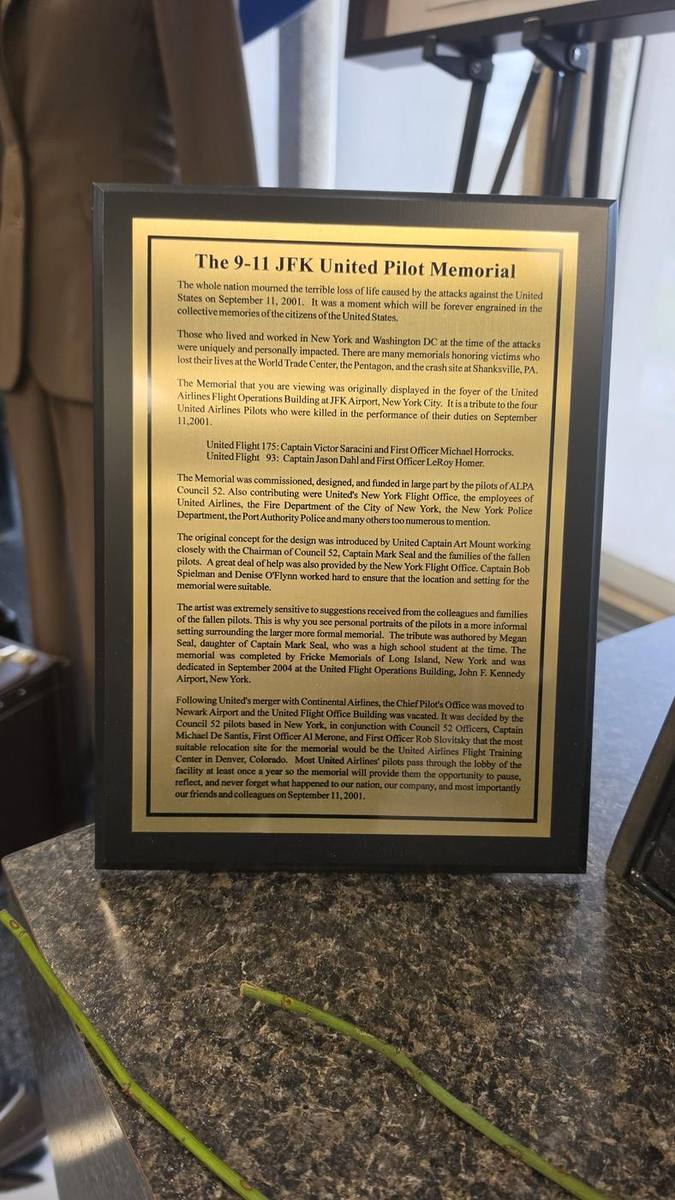
The memorial was originally displayed in the foyer of the United Airlines Flight Operations Building at JFK Airport. It honors the four United pilots killed in the performance of their duties on September 11, 2001:
It was commissioned, designed and funded in large part by the pilots of ALPA Council 52, with the United New York Flight Office, United employees, the New York City Fire Department, the New York Police Department, the Port Authority Police and many others. The original concept came from United Captain Art Mount, working with Council 52 Chairman Captain Mark Seal and the pilots’ families. The tribute text was written by Megan Seal, daughter of Captain Seal, who was then a high school student. The memorial was completed by Fricke Memorials of Long Island, New York and dedicated in September 2004.
After the United–Continental merger moved the Chief Pilot’s Office to Newark and the JFK building was vacated, Council 52 pilots chose the United Flight Training Center in Denver as its new home, because “most United Airlines pilots pass through the lobby of the facility at least once a year.”
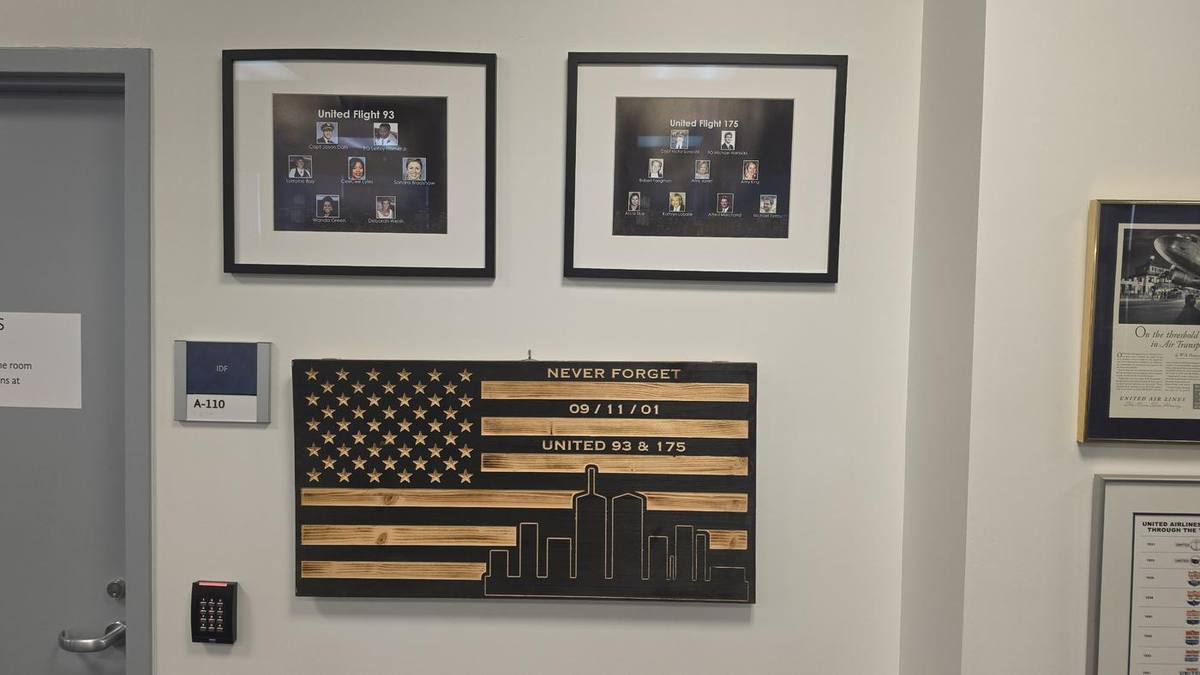
The memorial’s black granite carries portraits of the four pilots, with the inscription “Lost but never gone, missed but never forgotten.” A hand-built wooden flag reading “Never Forget 09/11/01 — United 93 & 175” hangs nearby, beside framed photographs of both crews.
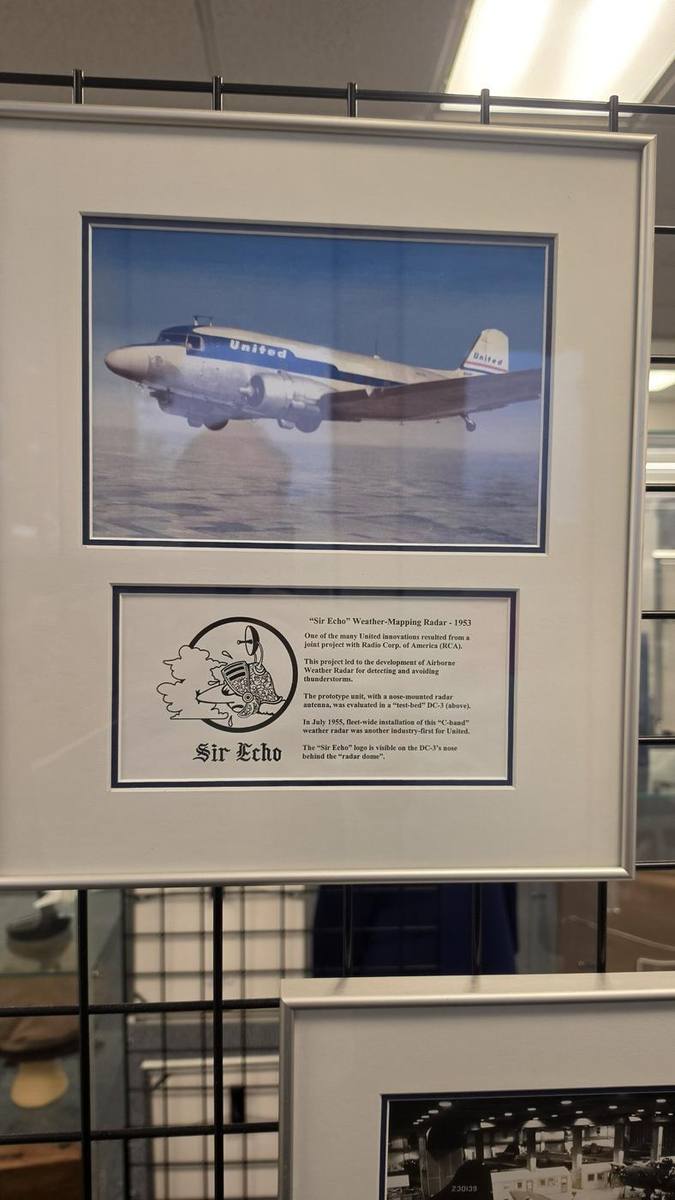
One of the many United innovations resulted from a joint project with Radio Corp. of America (RCA). It led to airborne weather radar for detecting and avoiding thunderstorms. The prototype, with a nose-mounted radar antenna, was evaluated in a “test-bed” DC-3. In July 1955, fleet-wide installation of this C-band weather radar was another industry-first for United.
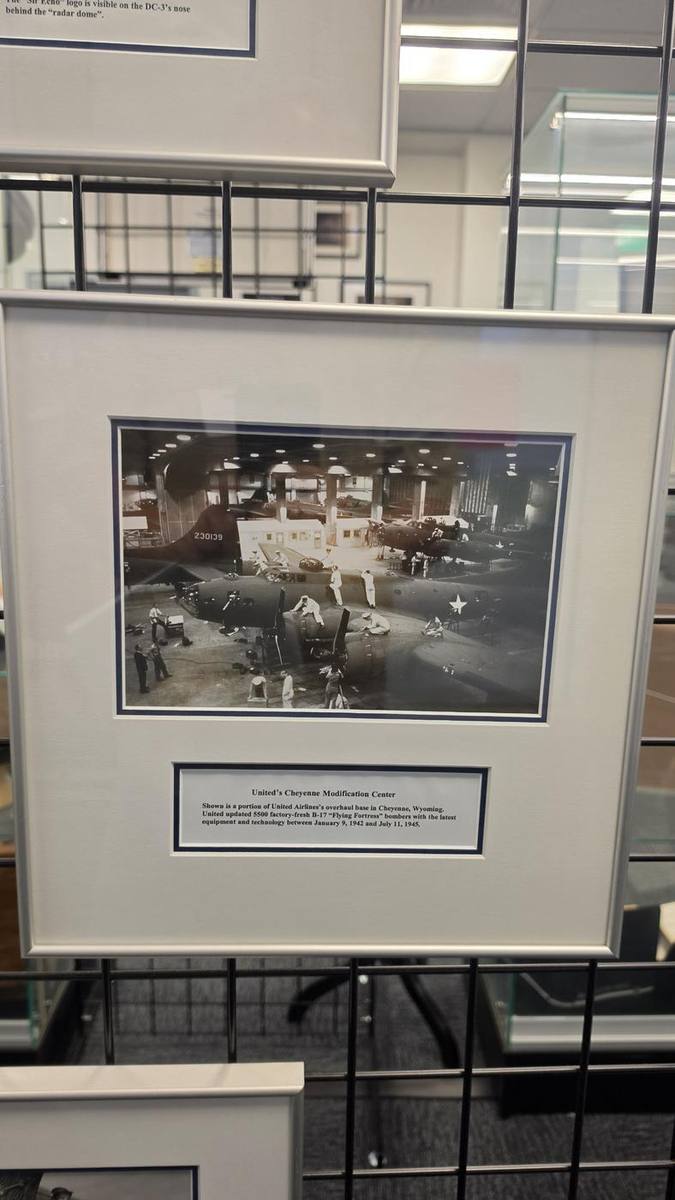
Cheyenne Modification Center. United’s overhaul base in Cheyenne, Wyoming updated 5,500 factory-fresh B-17 “Flying Fortress” bombers with the latest equipment and technology between January 9, 1942 and July 11, 1945.
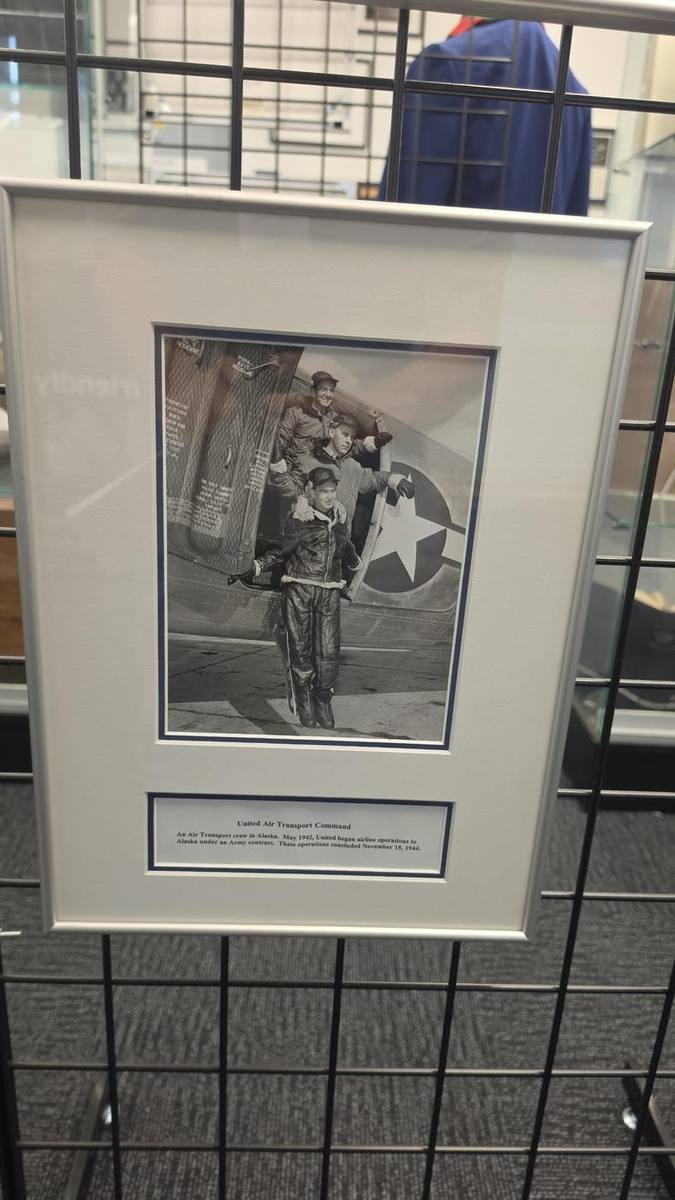
Air Transport Command. In May 1942 United began airline operations to Alaska under an Army contract. The operations concluded November 15, 1944.
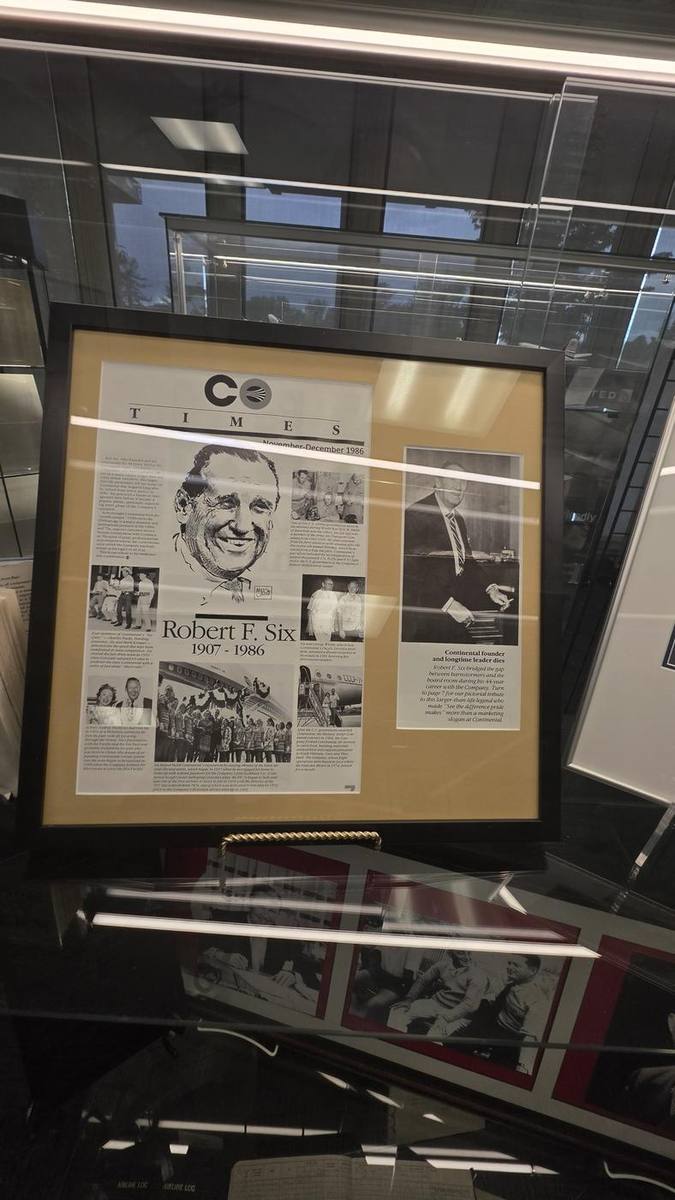
A framed tribute from the November–December 1986 CO Times remembers Robert F. Six (1907–1986), who founded and led Continental for 44 years. He mortgaged his home in 1937 for the down payment on the company’s first Lockheed 12s, moved Continental to jets in 1959 with the 707, and ordered three 747s, one dedicated to him in Honolulu. After the 1964 Military Airlift Command contract, Continental Air Services flew in Southeast Asia for a decade.
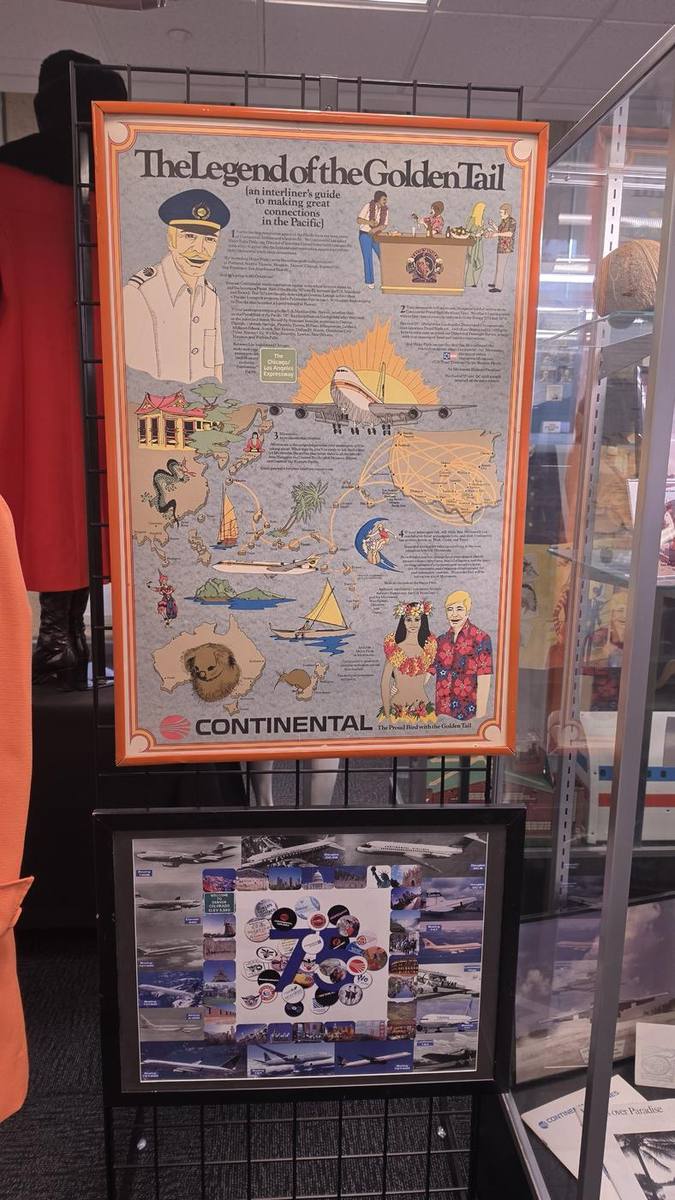
Next to it, a Continental poster, The Legend of the Golden Tail, is an interliner’s guide to connections across the Pacific, introducing Major Pride and Air Micronesia.
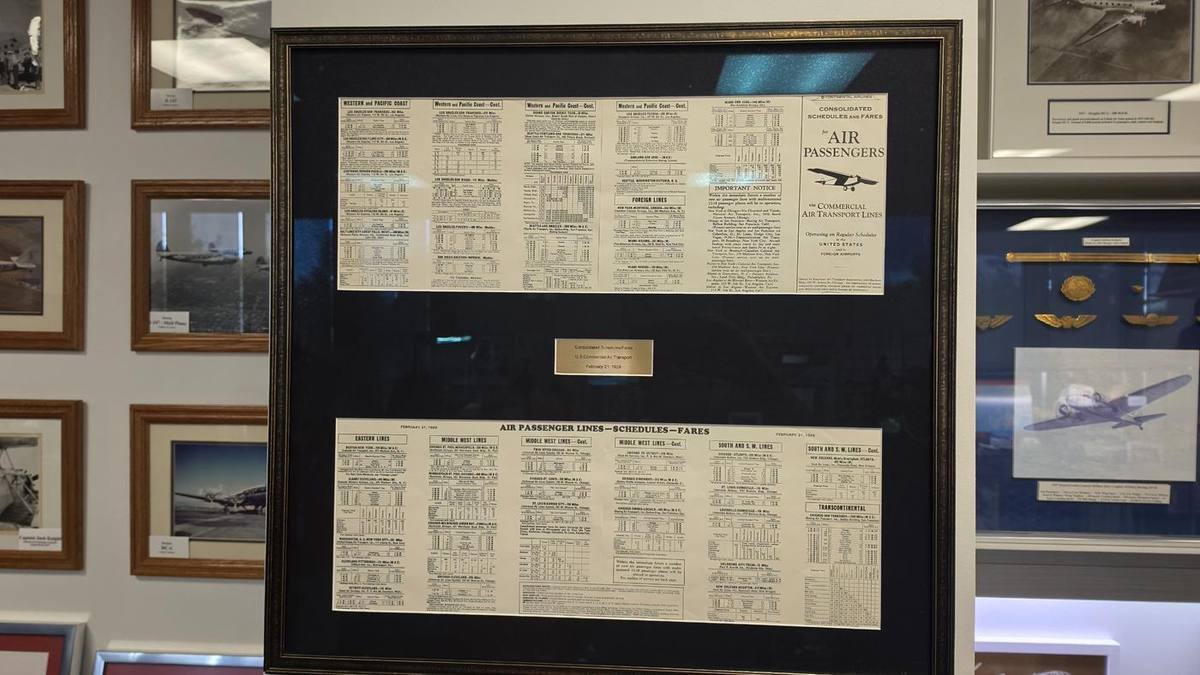
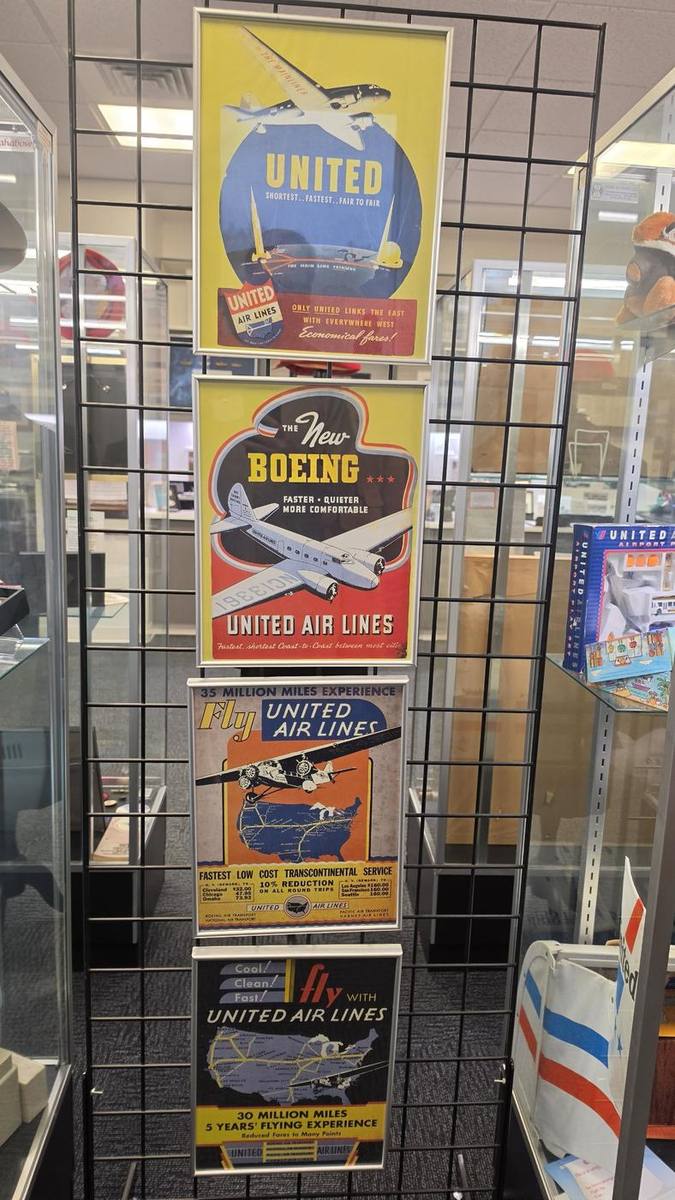
A framed set of “Consolidated Schedules and Fares for Air Passengers,” dated February 21, 1929, lists every U.S. commercial passenger line then flying, from Western Air Express to Boeing Air Transport’s transcontinental service. Nearby, vintage United posters promote “35 million miles experience,” “30 million miles, 5 years’ flying experience,” and “The New Boeing: faster, quieter, more comfortable.” A National Air Transport poster offers Rail-Air service from Baltimore to Chicago.
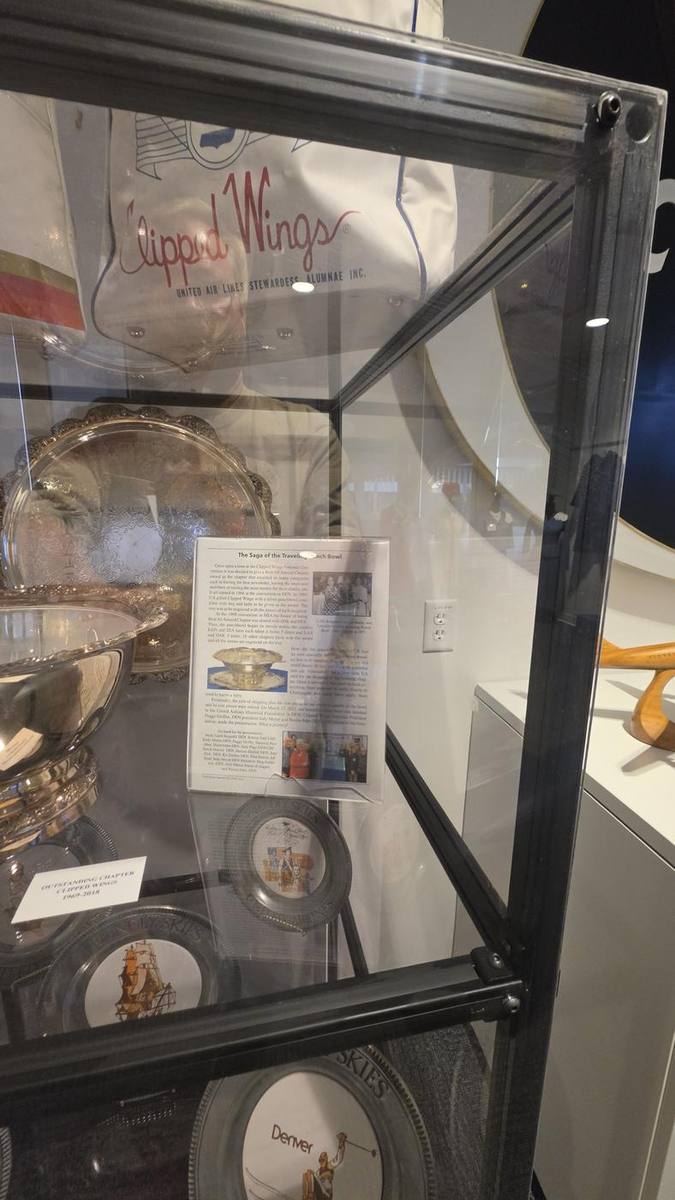
At the 1966 Clipped Wings convention in Denver, the group began awarding a Best All-Around Chapter prize. In 1969 United gifted Clipped Wings a silver punch bowl with tray and ladle to serve as the award, with each winner’s name engraved on the tray. Denver and Seattle have each taken it home five times, Los Angeles and Oakland three times, and 16 other chapters have won.
The bowl traveled in its own wooden box, too big for a normal car. As the cost of shipping grew, it was retired. On March 17, 2022 the bowl was donated to the United Airlines Historical Foundation in Denver.
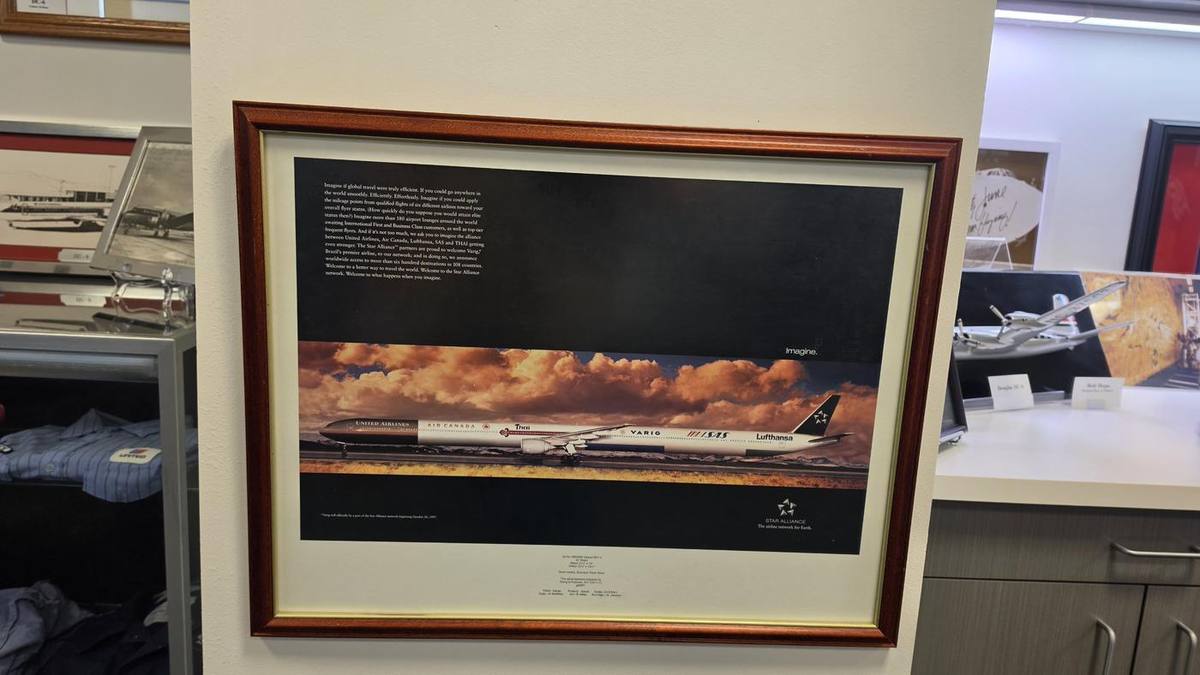
A framed advertisement titled “Imagine.” shows one aircraft wearing the liveries of United, Air Canada, Thai, Varig, SAS and Lufthansa. It welcomes Varig to the Star Alliance network, “worldwide access to more than six hundred destinations in 108 countries,” effective October 26, 1997.
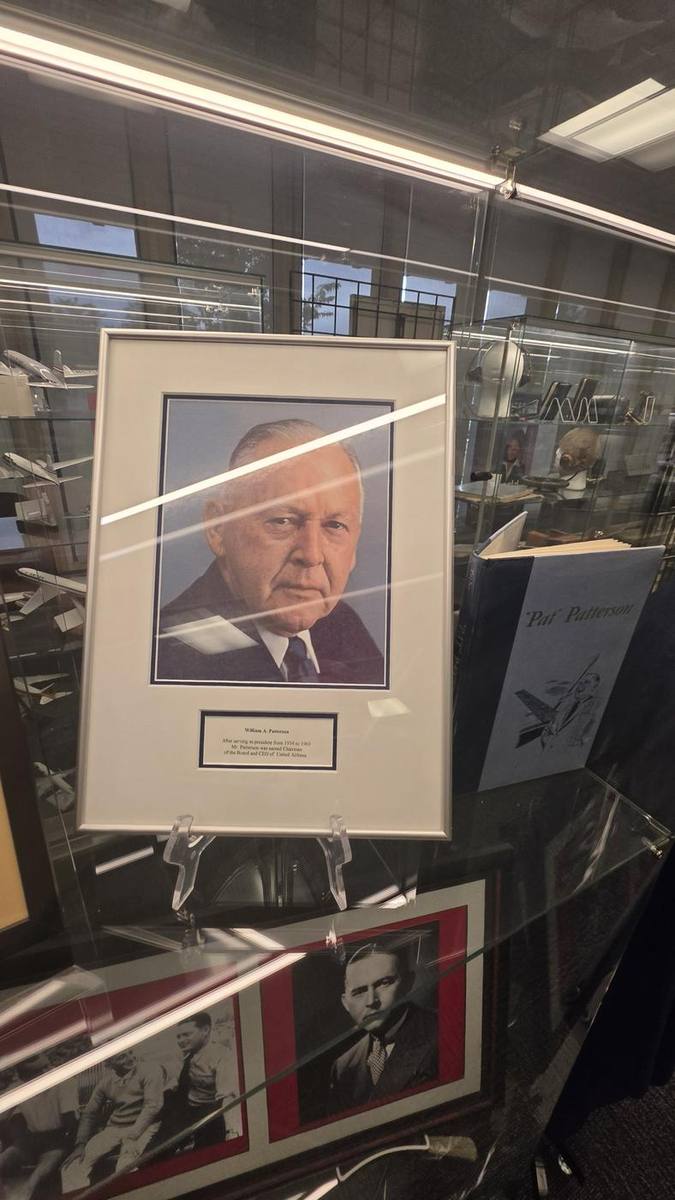
After serving as president from 1934 to 1963, William A. Patterson was named Chairman of the Board and CEO of United Airlines. His framed portrait hangs in the exhibit.
United-liveried aircraft are also preserved at the Museum of Flight, the Smithsonian, EAA, the Museum of Science and Industry and Evergreen Aviation Museum. Board member Clay Lacy restored and flies a DC-3 in 1948 United livery.
One of four predecessor companies. Its pilots flew 776,351 miles in the first year on Contract Air Mail route 3, without injury or a lost piece of mail.
Merged into United on June 1, adding 7,000 employees and making United the world’s largest airline at the time.
The exhibit plaque dates the sale of Pan Am’s Pacific Division to April 1985 and its London Heathrow gates and routes to 1990.
Merged with United on October 1, forming the airline as it exists today.
Materials on this site are provided for personal, non-commercial viewing only and may contain inaccuracies. UAHF does not warrant the completeness of site content and is not liable for damages arising from its use. Links to other sites do not imply endorsement or affiliation. UAHF is an independent nonprofit and is not operated by United Airlines. Colors are inspired by an airline-blue palette and do not use any airline’s logo. Exhibit photographs and placard text are from the UAHF Historical Exhibit; dates are as shown on the exhibit plaques.